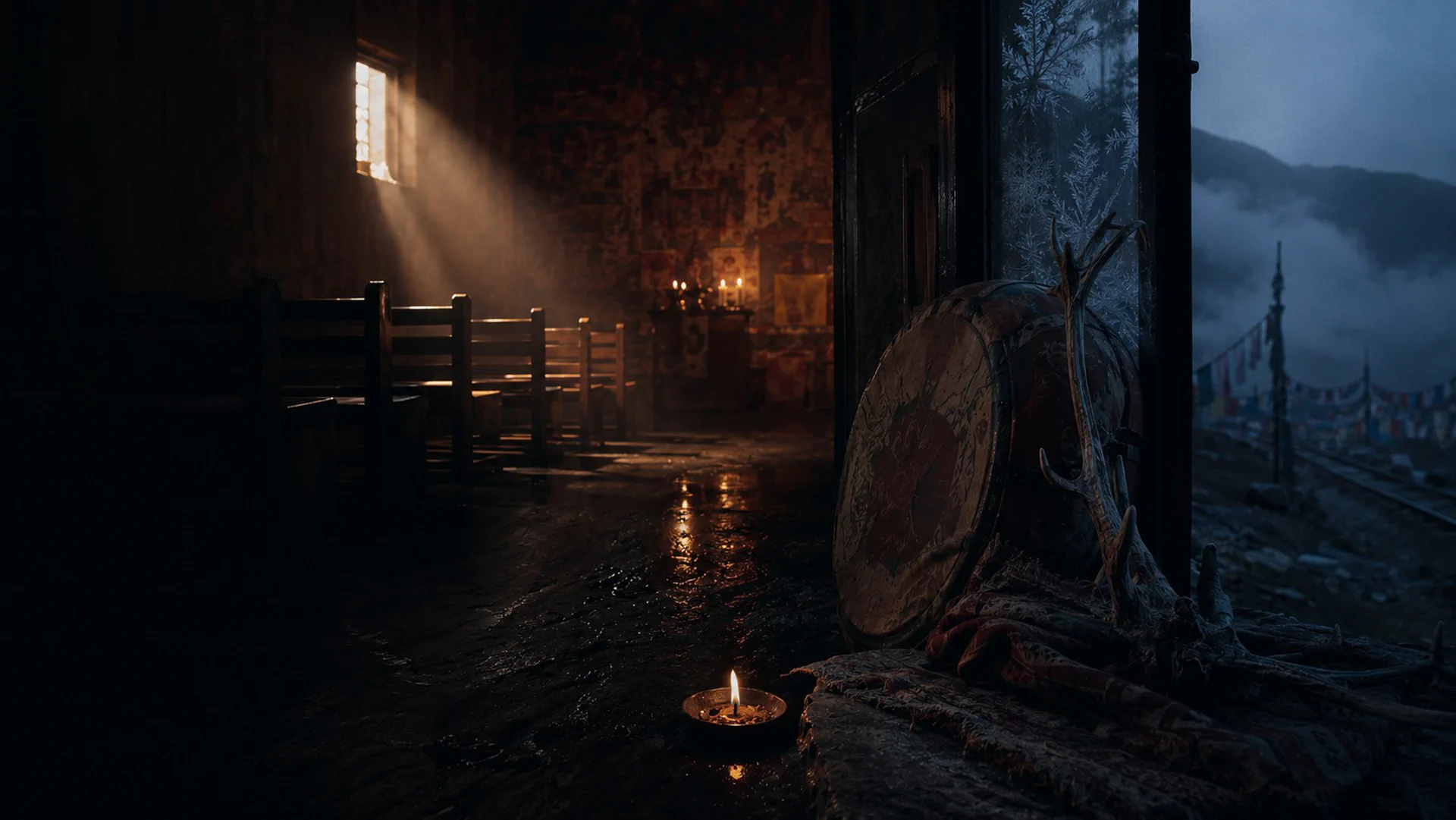
Religion in Independent Cinema: The Religious Landscape of Contemporary China
The saying “If we do not yet understand life, how can we understand death?” reflects a tendency within Chinese culture to defer ultimate questions. In mainstream Chinese cinema, religion and transcendent experience are often absent. Yet questions of suffering, death, and redemption have never disappeared; instead, they find expression in independent films.
This curated program brings together films engaging with Christianity, shamanism, Tibetan Buddhism, and folk religion to explore the religious landscape of contemporary China—a landscape that is complex, dynamic, and often hidden from public view. Through documentary and fiction alike, these works reveal how religious belief continues to shape ethical life, social relations, and individual understandings of suffering, mortality, and transcendence.
Christianity forms a central thread throughout the selection. From Searching for Lin Zhao’s Soul, which bears witness to faith as a form of resistance against totalitarianism, to Fangshan Church and Preachers, which document the everyday life of grassroots congregations, and My Father’s House, which reveals transnational religious networks, faith emerges not only as an ethical foundation but also as a vital social bond. In Gan Xiao’er’s fiction films The Only Sons, Raised From Dust, and Waiting For God, religion is deeply woven into the everyday realities of poverty, illness, and marriage, becoming an important means through which individuals understand and endure their circumstances. Meanwhile, the documentary Church Cinema exposes a subtle tension: a clear disconnect between intellectual filmmakers seeking to document the state of Christianity in China and ordinary believers who expect films primarily as vehicles for evangelization.
At the same time, documentaries such as Divine Doctor, Immortals in the Village, and The Spokesperson reveal the persistence and transformation of shamanic and mediumistic practices in modern society. Fiction films including Resurrection and The Widowed Witch employ magical and supernatural elements to challenge established social orders. Films set in China’s borderlands—such as Singing in the Wilderness, Songs from Maidichong, and Dark Red Forest—explore the profound entanglement of faith, ethnicity, and spiritual cultivation. The short film Where am I heading, Where am I from brings the questions to the level of the individual, portraying the spiritual search of contemporary young people confronted with anxiety about death.
Taken together, these works suggest that in a society officially defined as atheist, faith has not disappeared. Rather, it continues to exist in diverse and evolving forms. Independent cinema provides a visible space for these difficult-to-articulate spiritual experiences, allowing faith to find a voice amid silence.
Films in This Program


My Father's House


Songs from Maidichong


The Widowed Witch


Dark Red Forest

About the Curator
Arwen Li, Ph.D.