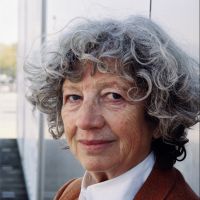
Ulrike Ottinger
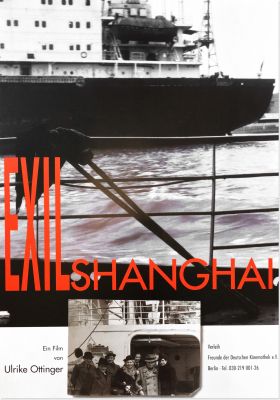
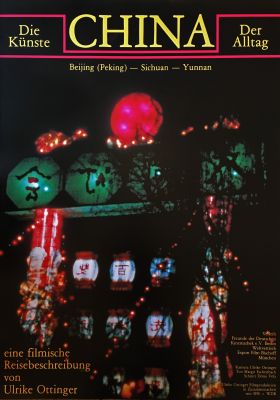
Ulrike Ottinger grew up in the city of Constance on Lake Constance where she set up her own studio at an early age. From 1962 until the beginning of 1969 she worked as an independent artist in Paris, while learning the technique of etching from Johnny Friedlaender. She also attended lectures given by Claude Lévi-Strauss, Louis Althusser and Pierre Bourdieu at the Collège de France. She exhibited her work at the Biennale internationale de l’estampe, Paris and in various galleries. In the early 70s, her interest in painting, photography and performance lead her into making films. Her first film script, ‘The Mongolian Double Drawer’ (Die Mongolische Doppelschublade) was written in 1966.After her return to West Germany she founded, in association with Constance University, the ‘filmclub visuell’ in 1969 in Constance in which international Independent Films, the New German Cinema (Neuer Deutscher Film) and historical films were shown. At the same time, she set up the gallery and the edition ‘galeriepress’, in which she presented Wolf Vostell, Allan Kaprow, Fernand Teyssier, Peter Klasen and English pop artists such as R. B. Kitaj, Joe Tilson, Richard Hamilton and David Hockney. Her first film, ‘Laocoon and Sons’ (Laokoon und Söhne), made in collaboration with Tabea Blumenschein, was recorded in 1971-1973 and celebrated its world premiere in the Arsenal Berlin. In 1973 she moved to Berlin and filmed the Happening-documentary ‘Berlinfever – Wolf Vastell’ (Berlinfieber – Wolf Vastell). This was followed by ‘The Enchantment of the Blue Sailors’ (Die Betörung der Blauen Matrosen) in 1975 with Valeska Gert and ‘Madame X – An Absolute Ruler’ (Madame X – Eine absolute Herrscherin) in 1977, co-produced by the ZDF, which caused a great sensation and was an international success.Work on the Berlin Trilogy, ‘Ticket of No Return’, (Bildnis einer Trinkerin, 1979), ‘Freak Orlando’ (1981) and ‘Dorian Grey in the Yellow Press’ (Dorian Grey im Spiegel der Boulevardpresse, 1984) began in 1979. She was able to win Delphine Seyrig, Magdalena Montezuma, Veruschka von Lehndorff, Eddie Constantine and Kurt Raab, as well as the composer Peer Raben for these works, which were filmed in industrial wastelands and alienated urban landscapes. The images she created here were to occupy her again in the short film ‘Usinimage’ (1987).In addition to fictional films, Ulrike Ottinger also devoted herself to the genre of documentary film. Intensive and comprehensive research, in some cases over many years, characterises all her films, in every genre. ‘China. The Arts – The People’ (China. Die Künste – Der Alltag, 1985) is the first of many long documentaries which were the product of her numerous tours through Asia. ‘Johanna d’Arc of Mongolia’ was filmed in Mongolia in 1989, as was her documentary ‘Taiga’ three years later, which accompanied migratory nomads through Northern Mongolia. But she was not only interested in long-distance travel: the documentary ‘Countdown’, which follows the changes in her own city of Berlin from the fall of the wall to the re-unification of Germany, is characterised by the same intense interest in ethnography. After the documentary ‘Exile Shanghai’ (1997) further travels led her to South East Europe where a further documentary and a fictional film were conceptualized: ‘Southeast Passage’ (Südostpassage, 2002) and ‘Twelve Chairs’ (Zwölf Stühle, 2004). Her documentary ‘Prater’ (2007) described stories in and around the traditional Viennese pleasure park and its history. An invitation from the IFFF Seoul, South Korea, brought her back to Asia and the resulting documentary, ‘The Korean Wedding Chest’, portraits a city hovering between tradition and modernity. At the turn of the year 2010/2011 she shot the film ‘Under Snow’ (Unter Schnee) in the Japanese Snow Country Echigo, which was shown in Haus der Kulturen der Welt, Berlin at the Asian-Pacific-Week in 2011, parallel to her exhibition ‘Floating Food’.For her film ‘Chamisso’s Shadow’ (Chamissos Schatten, 2016) Ulrike Ottinger traveled for three months along the remote coasts of the Bering Sea, tracing the paths taken by the great 18th and 19thC explorers. This is her longest documentary to date (12 hours); the accompanying exhibition ‘Journey around the world. Explorers – Forster – Humboldt – Chamisso – Ottinger’ (Weltreise. Forscher – Forster – Humboldt – Chamisso – Ottinger) took place in the National Library in Berlin.Ottinger's most recent work ‘Paris Calligrammes’ intertwines her personal memories of the Bohème in Paris with the grave social, political and cultural upheavals of our times, creating a cinematic figural poem (calligram). Filming took place from 2017 to 2019 and the premiere was in spring of 2020.Ulrike Ottinger also directed theatre and opera productions. She produced ‘Das Lebewohl’ (Berlin Ensemble, 2000), ‘Clara S.’ (Staatstheater Stuttgart, 1983) and ‘Begierde und Fahrerlaubnis’ (Steirischer Herbst, Graz 1986) by Elfriede Jelinek. She also staged...